
Living on a well in Woodside: pumps, pressure tanks and water tests
Rural residential properties in Woodside and foothill canyons depend on private domestic groundwater wells, deep submersible pumps, and diaphragm pressure tanks. Maintaining proper pressure switch contact alignment and calibrating bladder tank air pre-charge to 2 PSI below cut-in prevents rapid pump cycling and motor burnout.
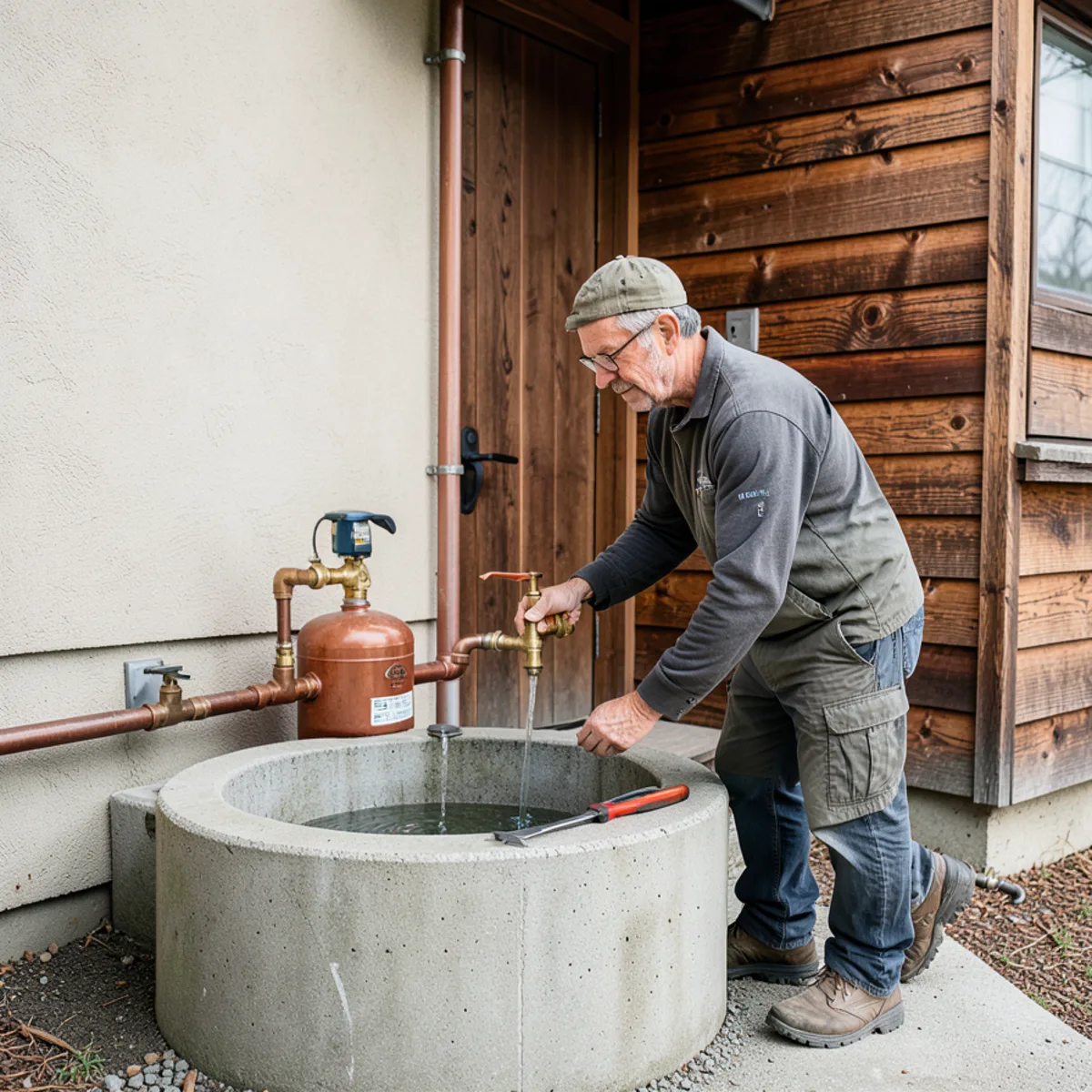
Table of Contents
- 1.Anatomy of a Mountain Well System: Casing, Pump and Sanitary Seal
- 2.Water Storage Tanks, Pressure Buffers and Booster Infrastructure
- 3.Water Chemistry and Filtration: Iron, Manganese and Hardness
- 4.Seasonal Water Table Fluctuations and Drought Preparedness
- 5.Private Well System Diagnostic Troubleshooting Guide
- 6.Frequently Asked Questions
Anatomy of a Mountain Well System: Casing, Pump and Sanitary Seal
Unlike flat bayside communities connected to municipal water lines, many properties throughout the Town of Woodside and the surrounding Santa Cruz Mountain foothills rely entirely on private groundwater wells. A domestic well system begins with a vertical borehole drilled 200 to over 600 feet deep through sedimentary rock and fractured granite aquifers. The borehole is lined with heavy-gauge steel or PVC casing. The top 20 to 50 feet is encased in a solid concrete sanitary grout seal under California Department of Water Resources (DWR Bulletin 74-90) regulations to prevent surface runoff and septic contaminants from infiltrating the drinking aquifer.
Key Takeaways
- Deep vertical boreholes drilled 200 to 600+ feet into fractured mountain granite
- Heavy-gauge steel or Schedule 40 PVC well casing stabilizes borehole walls
- DWR-mandated 20 to 50 foot concrete sanitary surface seal prevents surface contamination
- Sanitary well cap with screened insect-proof air vent protects the wellhead
Water Storage Tanks, Pressure Buffers and Booster Infrastructure
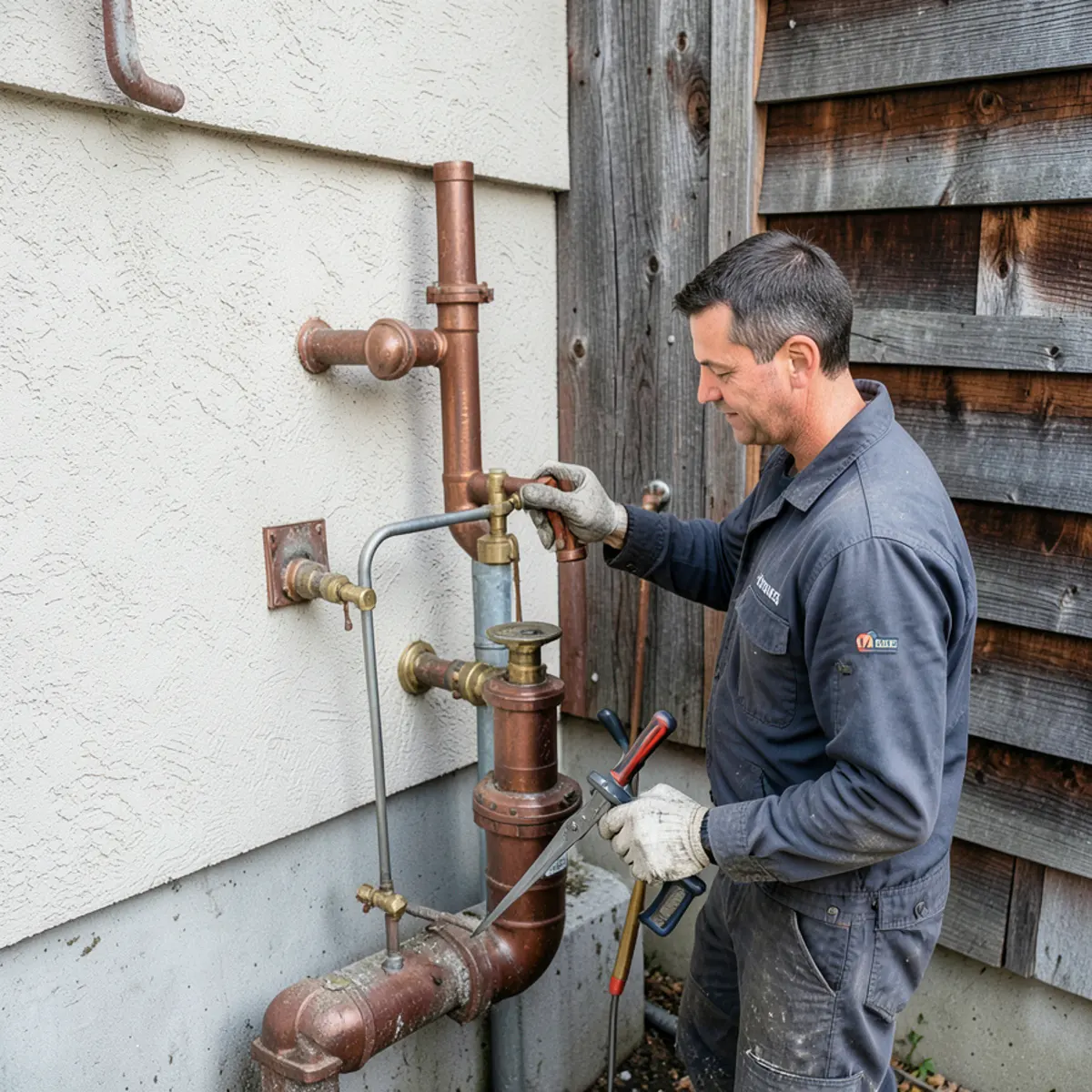
Many foothill wells in Woodside produce modest sustainable yields—typically between 2 and 7 gallons per minute (GPM). Because a luxury residence can draw 15 to 25 GPM during peak morning usage, relying on the well pump alone causes pressure failure. The standard engineering architecture in Woodside utilizes an atmospheric storage system. The down-hole well pump slowly pumps water into large food-grade polyethylene or concrete storage tanks (typically 2,500 to 10,000 gallons) situated on the property. A secondary high-pressure surface booster pump (such as a Grundfos VFD pump) draws from this storage reservoir to deliver strong, constant 60 PSI pressure to the home. Homeowners and property managers across Redwood City and neighboring communities can schedule on-site evaluations with our licensed team to inspect existing manifolds, test static line pressures, and verify code compliance under local municipal ordinances.
Key Takeaways
- Atmospheric storage reservoirs (2,500 to 10,000 gallons) decouple well yield from home draw
- Ensures abundant peak water supply for luxury homes even from low-yield 3 GPM wells
- Secondary variable-speed booster pumps deliver constant 60 PSI pressure to fixtures
- Provides dedicated 2,500-gallon water reserves required by Woodside Fire Protection District
Water Chemistry and Filtration: Iron, Manganese and Hardness
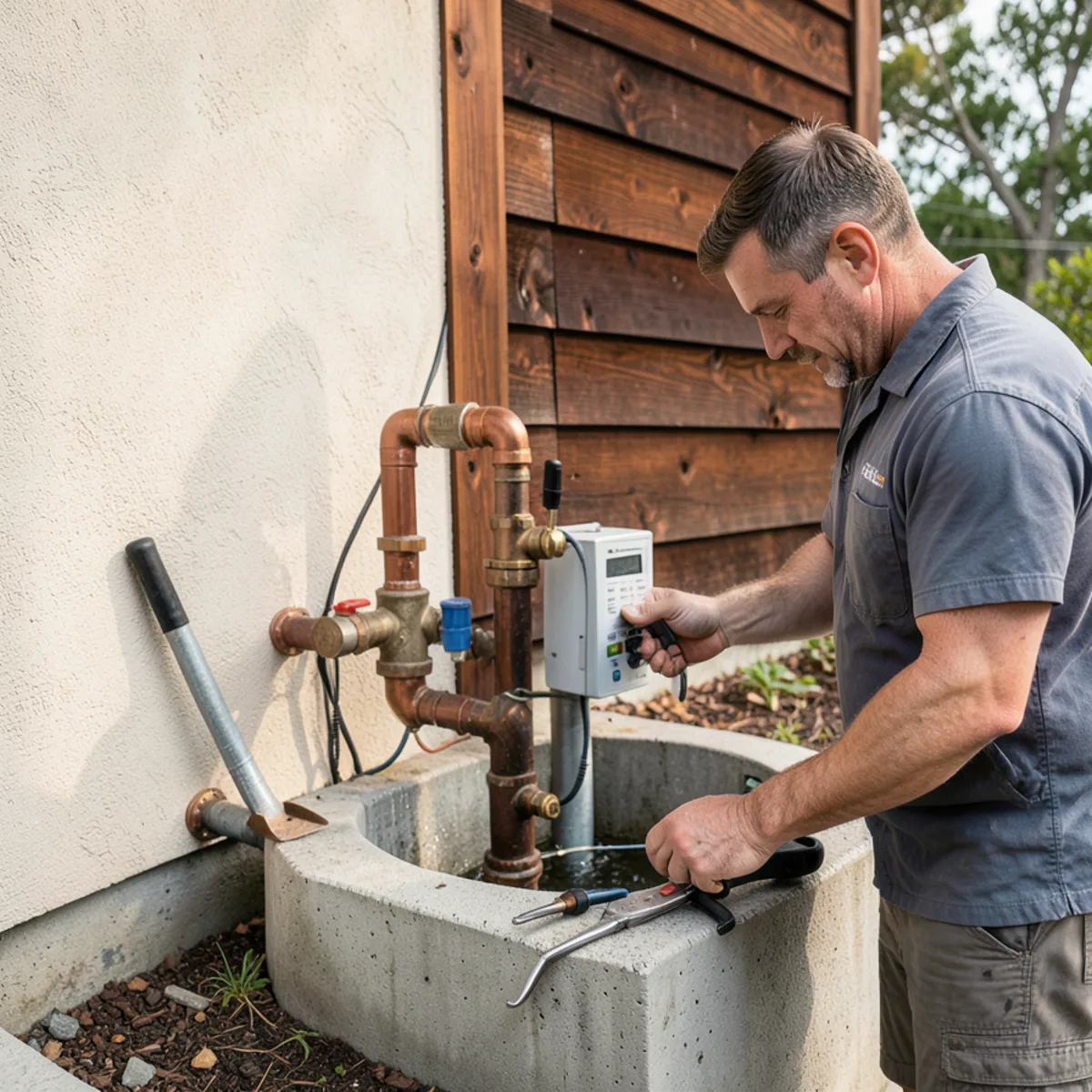
Groundwater in the Woodside foothills contains distinct mineral characteristics shaped by regional geology. Well water frequently carries elevated concentrations of dissolved calcium and magnesium (hardness measuring 120 to 250+ ppm), as well as naturally occurring iron and manganese. Left untreated, iron causes reddish-brown staining on porcelain fixtures, while manganese produces black flakes and stains laundry. Hard minerals also cause rapid scale accumulation in water heaters and boilers. A comprehensive water treatment array—including a 5-micron sediment spin-down filter, an air-injection oxidizing iron filter, and an ion-exchange water softener—is essential to preserve plumbing infrastructure.
Key Takeaways
- Woodside groundwater features moderate to high mineral hardness (120 to 250+ ppm)
- Dissolved iron and manganese cause unsightly fixture staining and mineral scaling
- Multi-stage treatment arrays include sediment filtration, iron oxidation, and water softening
- Ultra-violet (UV) disinfection systems neutralize any potential environmental bacteria
Seasonal Water Table Fluctuations and Drought Preparedness
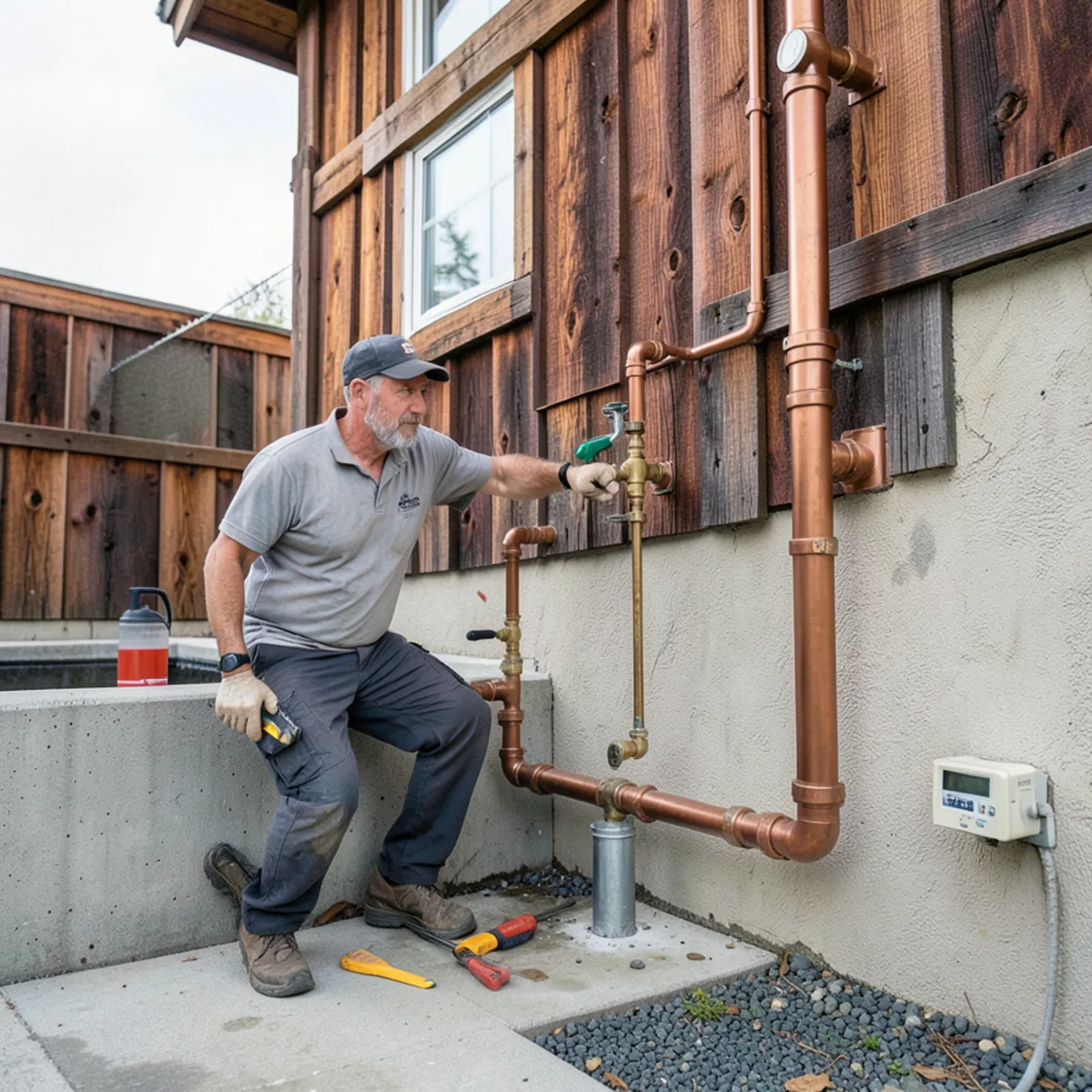
Mountain aquifers in Woodside rely on winter rainfall for seasonal replenishment. During late autumn, regional water tables drop to their lowest annual levels. If a property draws more water than the aquifer replenishes, the water table can drop below the down-hole pump intake, causing the pump to run dry and burn out its water-lubricated motor bearings. Well owners should install electronic dry-run protectors (such as SymCom PumpSavers) and digital water level sensors. Maintaining native drought-tolerant landscaping and regular water meter monitoring safeguards groundwater supplies through dry California summers. Every major plumbing repair, repipe, and heating modification performed by our technicians is backed by our comprehensive warranty and coordinated directly with the Redwood City Building Division at 1017 Middlefield Road or local county planning offices.
Key Takeaways
- Foothill aquifers experience significant seasonal drawdown between August and November
- Dry-running a well pump quickly destroys motor thrust bearings and impellers
- Install digital PumpSaver protection modules for automated low-water shutoff
- Maintain separate dedicated irrigation storage tanks to preserve domestic reserves
Private Well System Diagnostic Troubleshooting Guide
| Symptom | Likely Defect | Immediate Action | Professional Remedy |
|---|---|---|---|
| No water pressure at all taps | Tripped 240V breaker or burnt switch contacts | Check electrical panel | Replace Square D pressure switch / control box |
| Pump clicks on and off rapidly | Waterlogged pressure tank bladder | Check Schrader valve for water | Install new Flexcon or Well-Rite diaphragm tank |
| Sandy or discolored water | Aquifer silt intrusion or falling water table | Turn off irrigation | Install spin-down sediment separator and cartridge filter |
| Low volume from faucets | Worn pump impellers or mineral scale | Measure flow rate at wellhead | Pull submersible pump and inspect down-hole assembly |
Common Questions On This Topic
Frequently Asked Questions
Find clear answers to common questions about local plumbing codes, repairs, and our Redwood City service procedures.
San Mateo County Environmental Health recommends testing private well water annually for coliform bacteria, nitrates, and total dissolved solids (TDS). In addition, comprehensive mineral testing for iron, manganese, and hardness should be conducted every two to three years.
Regulatory References & Standards
- • California Plumbing Code Section 601.0
- • San Mateo County Well Ordinance
Related Plumbing Services
Target Service Communities
Need professional assistance with this plumbing issue?
Our technicians dispatch daily from 1835 Valota Rd. Call now to speak directly with our Redwood City team.