
Descaling a tankless heater on soft Hetch Hetchy water: is it needed?
Descaling a tankless water heater every 12 to 18 months removes baked-on calcium carbonate and mineral deposits from the narrow copper heat exchanger coils. Circulating four gallons of food-grade virgin white vinegar through dedicated service isolation valves with a small submersible pump restores factory efficiency and prevents E016 overheating errors.
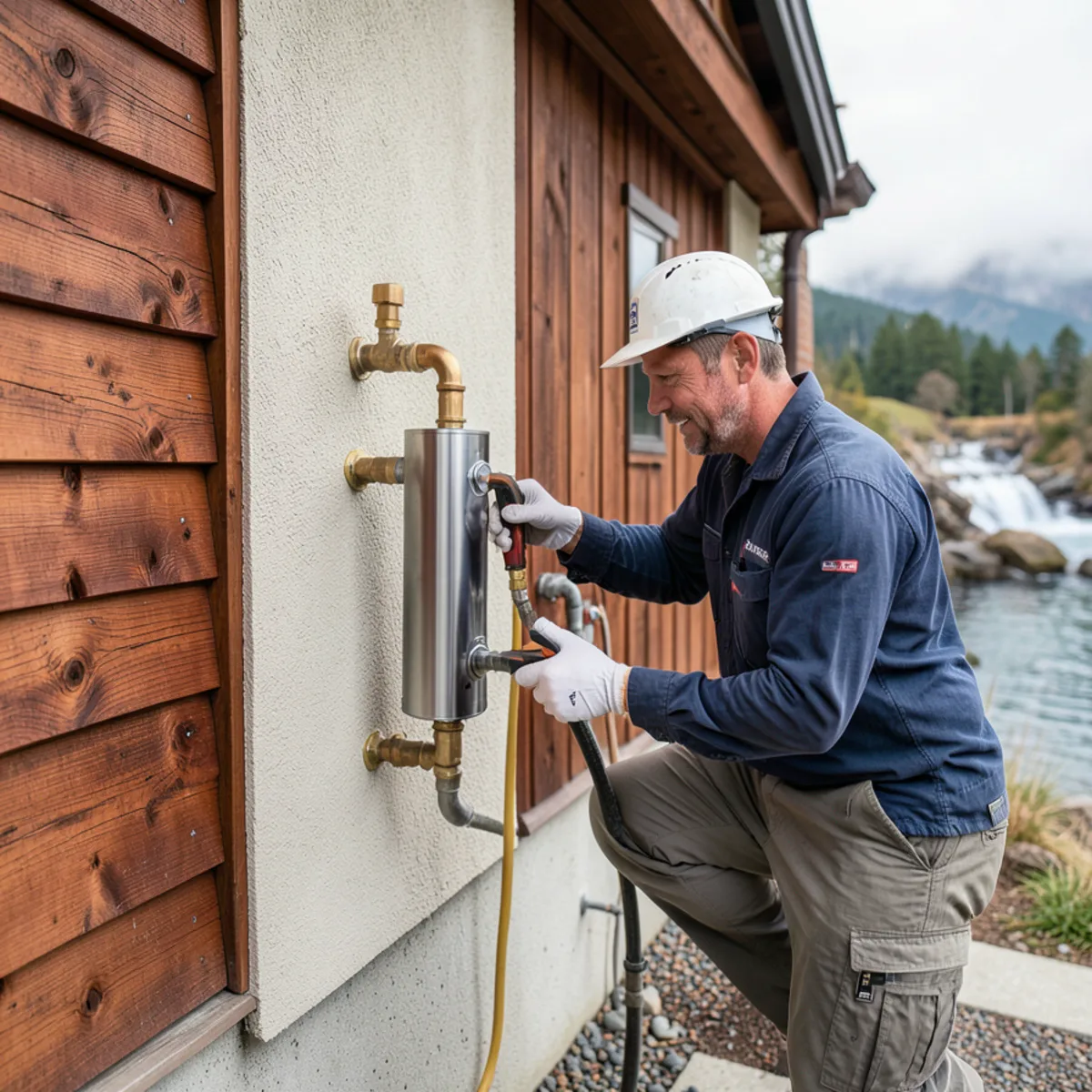
Table of Contents
- 1.Why Soft Water Systems Still Suffer Scale Accumulation
- 2.Equipment Setup: Submersible Pump, Hoses and Service Isolation Valves
- 3.The 60-Minute Closed-Loop Chemical Recirculation Procedure
- 4.Post-Flush Filter Cleaning, Purging and Code Documentation
- 5.Tankless Descaling Process Checklist
- 6.Frequently Asked Questions
Why Soft Water Systems Still Suffer Scale Accumulation
Many homeowners in Redwood City assume that because municipal tap water from the Hetch Hetchy reservoir is exceptionally soft (15 to 30 ppm hardness), tankless water heaters never require descaling. This is an expensive misconception. Inside a high-efficiency tankless water heater, water flows through narrow, micro-finned copper heat exchanger tubes subjected to intense burner temperatures exceeding 1,200 degrees Fahrenheit. Even trace amounts of dissolved calcium and magnesium precipitate onto these hot metal surfaces. Over 18 to 24 months, microscopic mineral crystals fuse into an insulating scale barrier that restricts water flow, reduces heat transfer efficiency, and triggers high-temperature thermal sensor lockouts.
Key Takeaways
- Intense burner heat causes trace minerals to precipitate even in soft Hetch Hetchy water
- Microscopic mineral crystals form an insulating barrier inside copper heat exchanger fins
- Restricted tube diameter reduces flow rate and triggers high-temperature sensor codes
- Periodic descaling maintains 0.95 UEF energy efficiency and protects manufacturer warranties
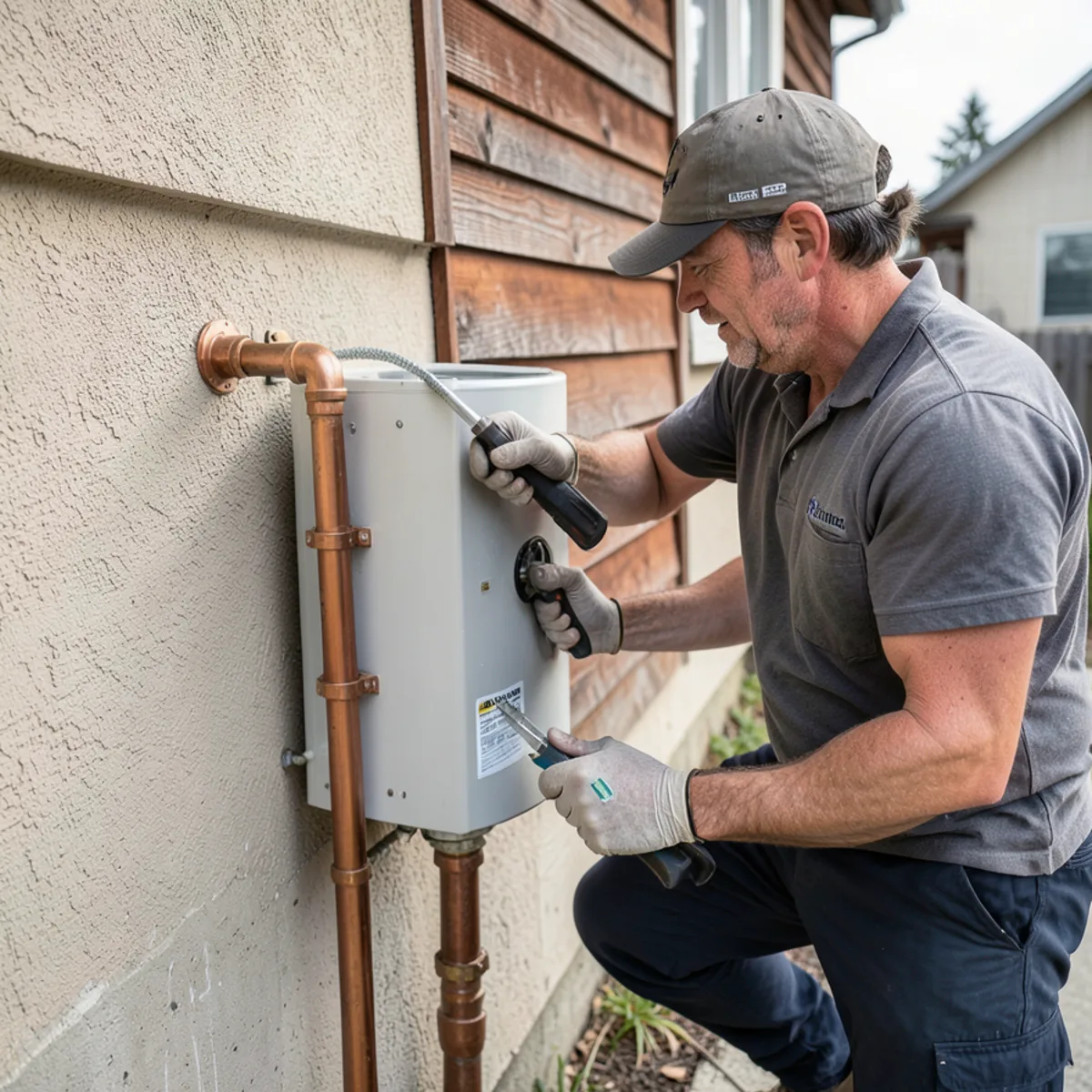
Equipment Setup: Submersible Pump, Hoses and Service Isolation Valves
Descaling a tankless water heater requires establishing a temporary closed chemical recirculation loop. Standard code-compliant installations in Redwood City feature a dedicated service valve kit—two heavy brass isolation valves with integrated 3/4-inch hose purge ports installed on the cold water inlet and hot water outlet pipes. To assemble the flush kit, you need a 1/6 horsepower oil-free submersible utility pump, two 6-foot heavy-duty washing machine hoses, a clean 5-gallon plastic bucket, and three to four gallons of food-grade virgin white vinegar or non-toxic citric acid descaler.
Key Takeaways
- Dedicated brass isolation service valves with integrated 3/4-inch hose purge ports
- 1/6 HP oil-free submersible utility pump capable of continuous recirculation
- Two high-pressure braided washing machine hoses with female garden hose fittings
- Use virgin food-grade white vinegar (5% acidity) or manufacturer-approved citric acid
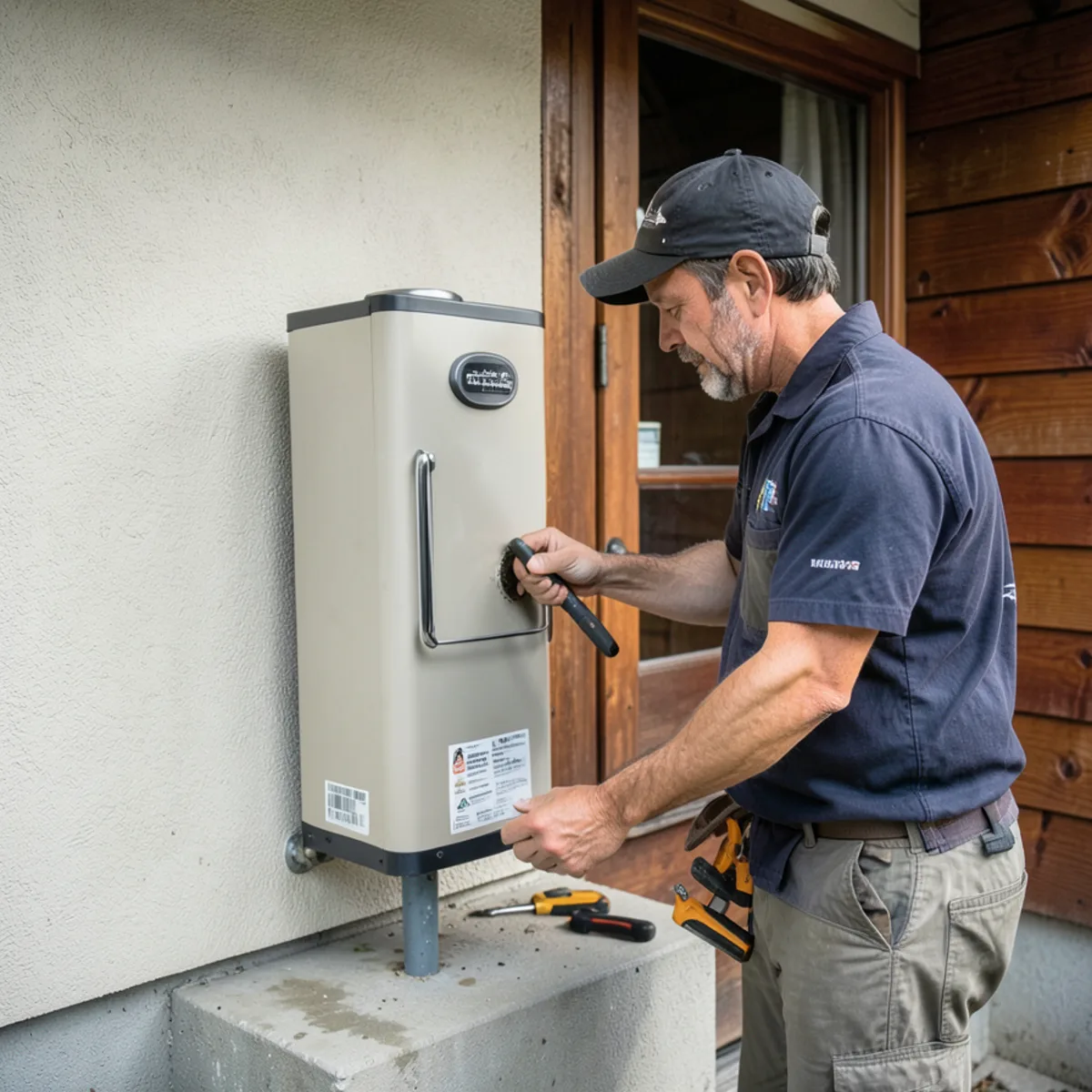
The 60-Minute Closed-Loop Chemical Recirculation Procedure
To execute the descaling flush, begin by disconnecting electrical power to the tankless unit and shutting off the yellow-handled gas isolation cock. Close the main cold inlet and hot outlet blue and red valve handles to isolate the heater from your home plumbing. Submerge the utility pump in the 5-gallon bucket filled with 3.5 gallons of undiluted white vinegar. Connect the pump discharge hose to the cold water purge port, and connect the second hose from the hot water purge port, routing its open end back into the bucket. Open both purge ports and plug in the pump. As mild acetic acid circulates through the copper heat exchanger, it chemically reacts with alkaline calcium carbonate scale, producing effervescent carbon dioxide bubbles and dissolving mineral deposits.
Key Takeaways
- Disconnect electrical power and turn manual gas cock perpendicular to isolate fuel
- Close blue and red isolation valves to decouple tankless unit from household plumbing
- Circulate 3.5 gallons of undiluted white vinegar through heat exchanger for 60 minutes
- Acid reacts with calcium carbonate scale, foaming vigorously as minerals dissolve
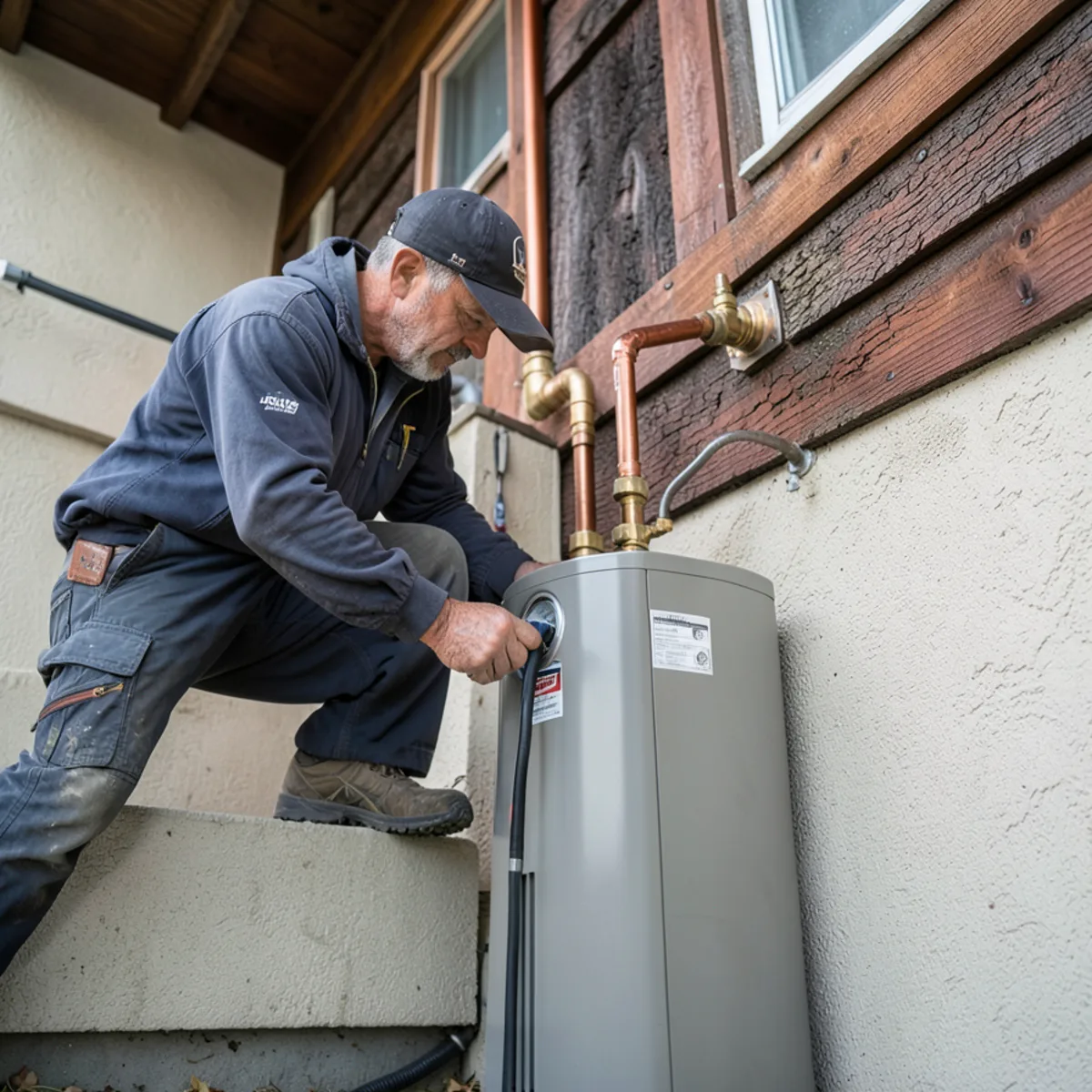
Post-Flush Filter Cleaning, Purging and Code Documentation
After 60 minutes of chemical recirculation, the system must be completely purged before restoring domestic hot water service. Disconnect the pump, close the cold purge port, and open the main cold water supply valve to flush clean tap water through the heat exchanger and out the hot purge port into the bucket for five minutes, removing all vinegar residue. Next, shut the purge port, unscrew the inline cold water filter screen from the bottom of the heater, and rinse away trapped copper flakes and sand. Reinstall the filter, open both main isolation valves, restore gas and electric power, and verify burner ignition. Record the maintenance date inside the service panel to preserve manufacturer warranty protections.
Key Takeaways
- Flush fresh municipal cold water through the heat exchanger for 5 minutes to clear acid
- Remove and clean the stainless steel cold water inlet filter screen of trapped debris
- Restore gas and electrical power, test hot water delivery at adjacent fixture
- Document service date in home maintenance logs to maintain 15-year warranty compliance
Tankless Descaling Process Checklist
| Phase | Action Required | Safety Precaution |
|---|---|---|
| 1. Isolation | Close blue cold and red hot domestic valves; shut off gas | Ensures vinegar cannot enter drinking water lines |
| 2. Setup | Submerge pump in bucket with 4 gallons white vinegar | Connect hoses securely to brass service purge ports |
| 3. Circulation | Plug in pump and circulate vinegar for 60 minutes | Monitor bucket for foaming as scale dissolves |
| 4. Cold Rinse | Close cold service port, run fresh water through hot port 5 min | Clears residual acidic vinegar from heat exchanger |
| 5. Restart | Clean cold inlet filter screen, restore gas and electric power | Verify digital display shows zero active error codes |
Common Questions On This Topic
Frequently Asked Questions
Find clear answers to common questions about local plumbing codes, repairs, and our Redwood City service procedures.
No. Never use aggressive mineral acids like muriatic (hydrochloric) acid. Strong acids will etch, pit, and dissolve the thin copper and stainless steel heat exchanger tubing, causing catastrophic internal pinhole breaches. Always use food-grade virgin white vinegar or manufacturer-approved citric acid descalers.
Regulatory References & Standards
- • Manufacturer Service Manuals (Navien / Rinnai / Noritz)
- • California Energy Code Title 24
Need professional assistance with this plumbing issue?
Our technicians dispatch daily from 1835 Valota Rd. Call now to speak directly with our Redwood City team.