
Septic or sewer in Emerald Lake Hills? What homeowners should know
Emerald Lake Hills features a blend of hillside municipal sewer connections and older private septic systems on steep terrain. Homes positioned downhill from street mains depend on heavy-duty grinding sewage ejector pumps with high-water alarm panels to pump wastewater uphill.
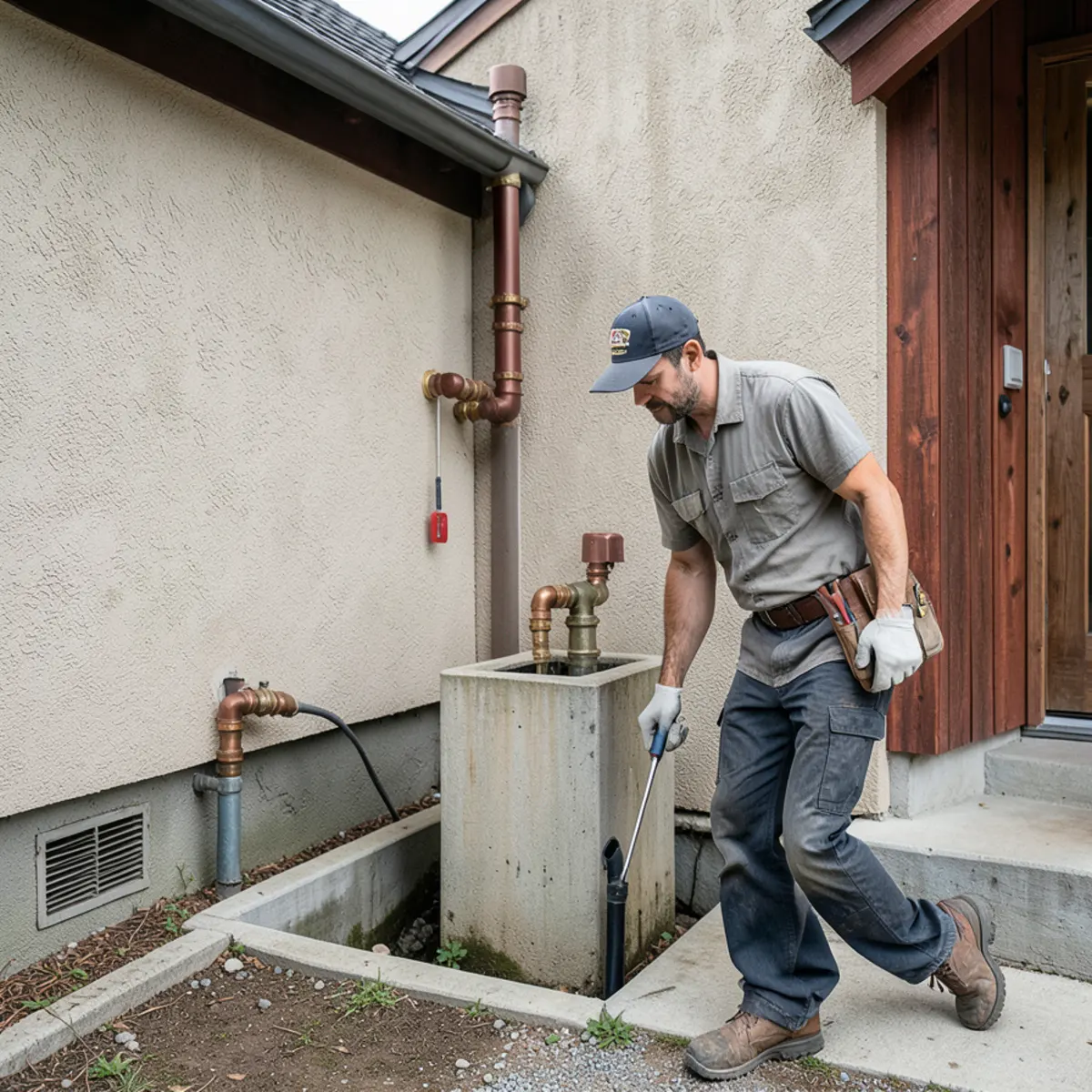
Table of Contents
- 1.Topographical Challenges: Steep Serpentine Bedrock and Soil Limits
- 2.Sewage Ejection and Grinder Pump Systems for Downslope Parcels
- 3.Septic-to-Sewer Conversion Requirements and Permitting
- 4.High Pressure Domestic Water Dynamics and PRV Protection
- 5.Sewage Ejector Maintenance vs. Septic System Protocol
- 6.Frequently Asked Questions
Topographical Challenges: Steep Serpentine Bedrock and Soil Limits
Emerald Lake Hills is an unincorporated community situated in the rugged foothills west of Redwood City. Characterized by dramatic 20 to 40 percent hillside grades, dense mature oak groves, and rocky topography, the area presents unique wastewater challenges. Geologically, the hills consist of shallow topsoils underlain by dense Franciscan complex sandstone and impermeable green serpentine bedrock. In properties that still retain older on-site septic systems, this shallow bedrock severely restricts wastewater percolation. During saturated winter rainstorms, failing septic drainfields can result in effluent surfacing on downslope grades, creating significant environmental health hazards and requiring modern engineered interventions.
Key Takeaways
- Steep hillside slopes (20% to 40% grades) restrict natural gravity drainage options
- Shallow topsoil over impermeable serpentine bedrock causes septic leach field saturation
- Winter rains saturate foothill soils, preventing effluent absorption and causing surfacing
- San Mateo County Environmental Health strictly regulates hillside wastewater disposal
Sewage Ejection and Grinder Pump Systems for Downslope Parcels
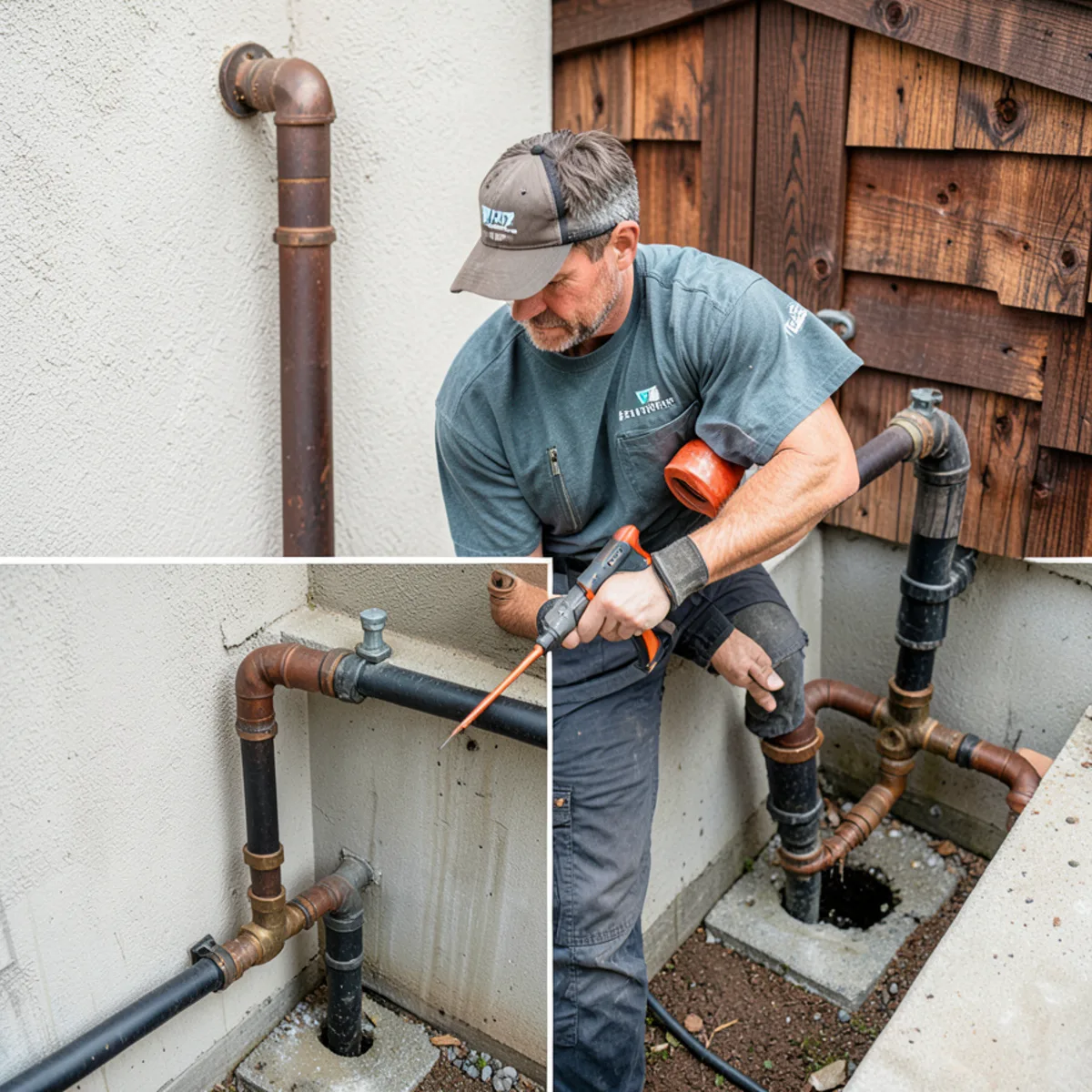
Because public sanitary sewer mains in Emerald Lake Hills follow municipal street corridors, homes constructed on the downslope side of the roadway sit far below the public sewer line. Under California Plumbing Code (CPC) Section 710.2, gravity wastewater flow is physically impossible in these configurations. Plumbers install sealed, gas-tight sewage ejector or grinder pump stations (such as Liberty Pro380 or Myers duplex systems) outside the foundation. Solid waste and household wastewater drain by gravity into a heavy-duty fiberglass or polyethylene basin. Heavy-duty 2-horsepower grinder impellers macerate solids into a fine slurry and pump it under high pressure through a 2-inch PVC force main upward to the street sewer connection. In addition, duplex grinder systems incorporate dual alternating pumps so that if one pump requires service, the secondary pump engages automatically to protect finished basements from overflow.
Key Takeaways
- Downslope home fixtures sit below street sewer mains, preventing gravity drainage
- Sealed duplex grinder pump stations macerate solids and pump waste upward to the street
- Heavy-duty 2-inch Schedule 40 or 80 PVC force mains withstand continuous pumping pressure
- Dual-check valves and auxiliary high-water alarms prevent basement wastewater backups
Septic-to-Sewer Conversion Requirements and Permitting
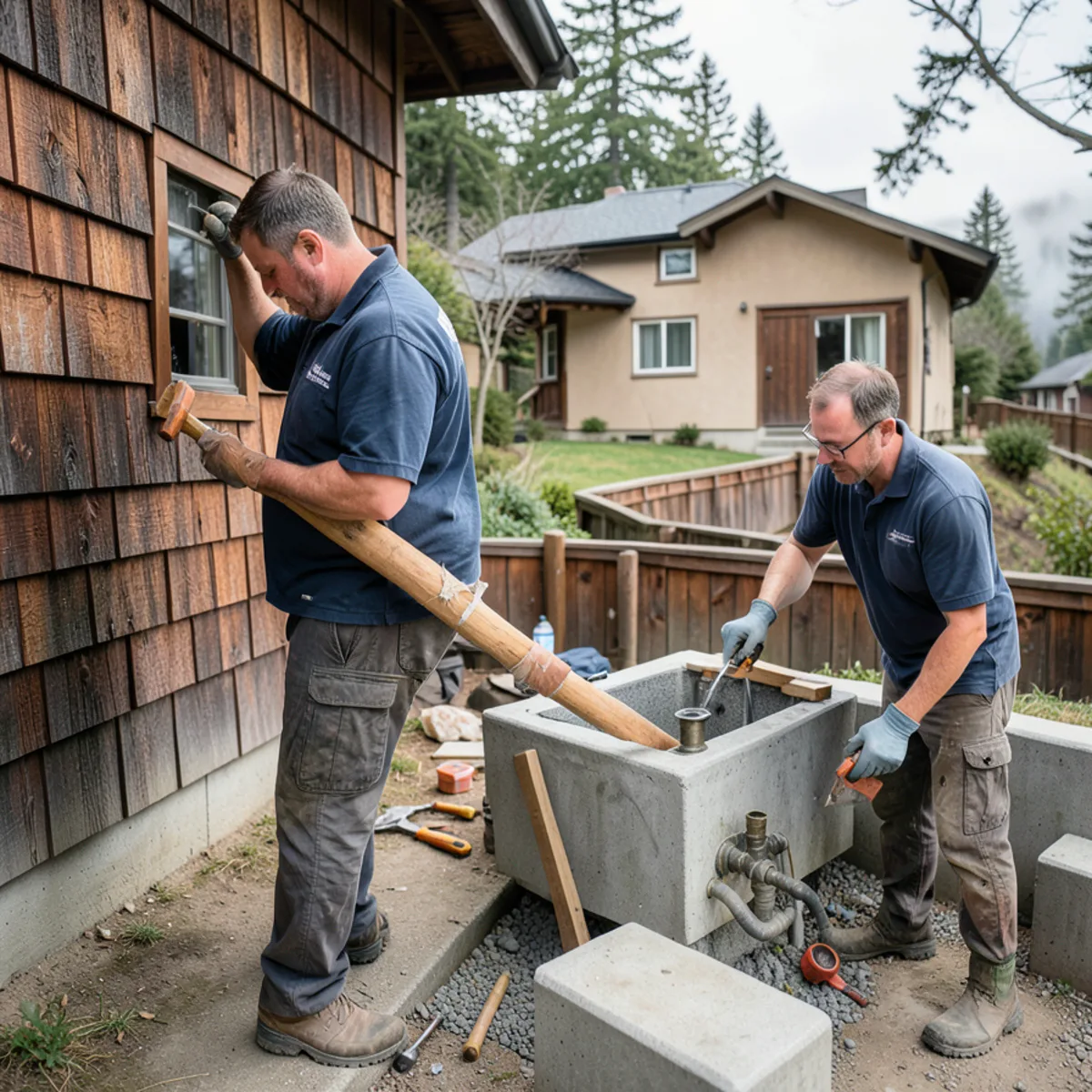
Over recent decades, municipal infrastructure extensions have brought public sewer collection mains within reach of many Emerald Lake Hills streets. Converting an older home from an aging septic tank to the municipal sewer requires coordinated engineering and multi-agency permitting. Technicians pull trenching and plumbing permits through the San Mateo County Planning and Building Department and secure connection authorization from the local sanitary sewer agency. Once the new 4-inch lateral or pressurized force main is connected to the street, California Plumbing Code Section 722.0 mandates proper septic tank abandonment: the old concrete tank must be pumped dry, its concrete lid and bottom punctured to prevent water accumulation, and the cavity completely backfilled with clean sand, crushed rock, or concrete slurry. Coordinating with the San Mateo County Environmental Health division ensures proper decommissioning documentation is recorded on property title records prior to future property sales.
Key Takeaways
- Multi-agency permitting through San Mateo County Planning and Building Department
- Excavation and installation of new 4-inch SDR-26 or Schedule 40 sewer laterals
- Mandatory septic tank abandonment under CPC Section 722.0 (pumping, puncturing, and slurry fill)
- Eliminates environmental contamination risks and restores property value for resale
High Pressure Domestic Water Dynamics and PRV Protection
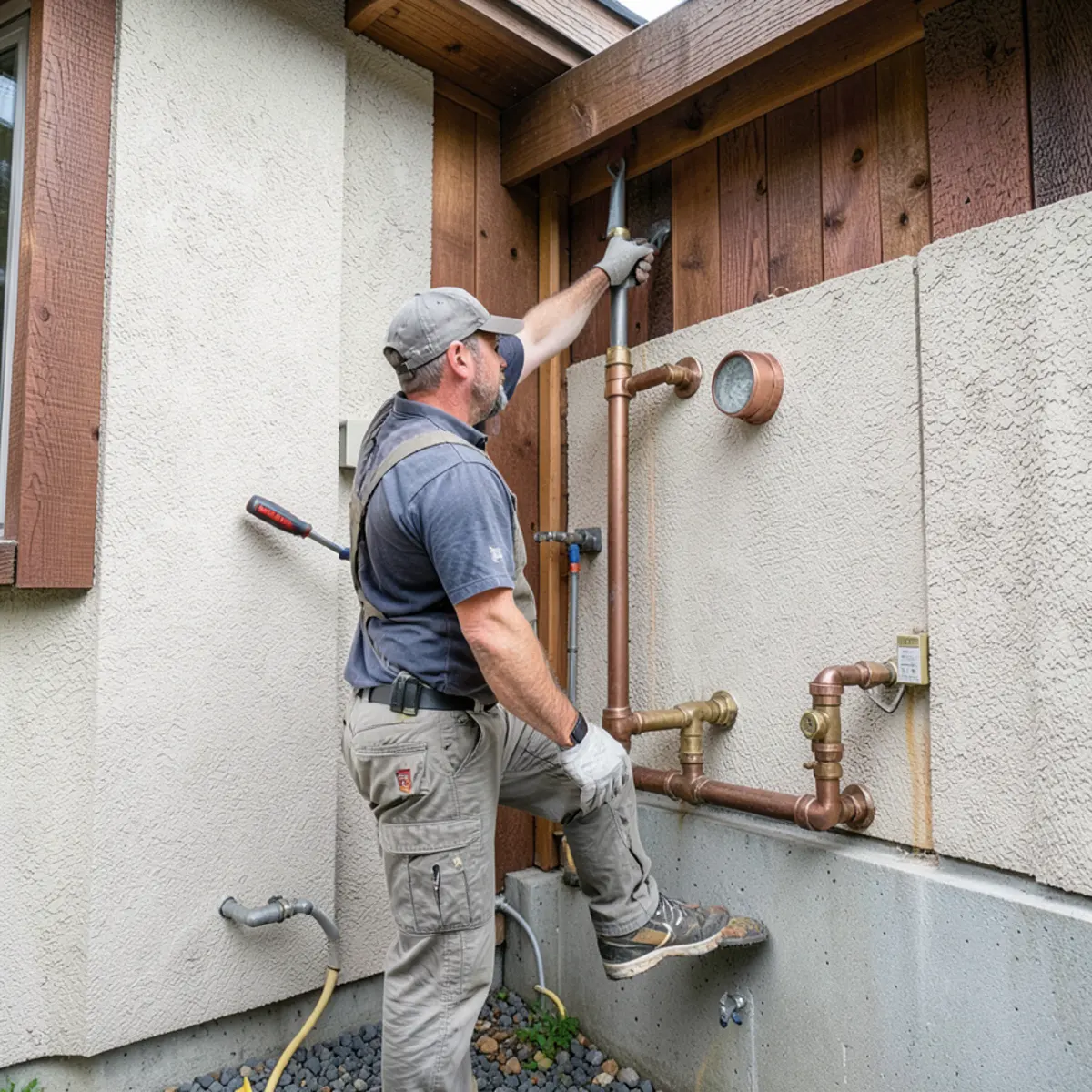
Wastewater is only half the engineering challenge in Emerald Lake Hills; domestic incoming water pressure presents equally severe hazards. To deliver water to homes perched atop steep ridges, municipal water utilities pump water into high-elevation storage tanks. For residences situated at lower elevations along Jefferson Avenue or near the lakes, this hydrostatic head creates street pressures exceeding 110 to 140 PSI. This extreme pressure can rupture water heater tanks, split washing machine hoses, and destroy ceramic faucet cartridges. Our plumbers install dual-stage Watts LF25AUB pressure reducing valves (PRVs) and calibrated thermal expansion tanks to step incoming pressure down to a safe, steady 60 to 65 PSI.
Key Takeaways
- Hydrostatic gravity head generates municipal street water pressures exceeding 120 PSI
- Excessive line pressure causes water hammer, pipe joint failure, and fixture leaks
- Dual-stage commercial-grade Watts pressure reducing valves step pressure down to 60 PSI
- Mandatory thermal expansion tanks absorb hot water expansion within closed plumbing systems
Sewage Ejector Maintenance vs. Septic System Protocol
| Maintenance Task | Hillside Sewage Ejector | Legacy Septic Tank |
|---|---|---|
| Inspection Frequency | Annual mechanical check & float testing | Septic inspection every 2 to 3 years |
| Power Dependence | Requires continuous electrical power | Operates 100% off-grid by gravity |
| Pumping Requirement | Basin self-cleans on every pump cycle | Pumped out every 3 to 5 years by tanker |
| Emergency Protocol | Cease water use immediately if alarm sounds | Cease water use if drain field saturates |
Common Questions On This Topic
Frequently Asked Questions
Find clear answers to common questions about local plumbing codes, repairs, and our Redwood City service procedures.
Under San Mateo County Environmental Health regulations, if a public sanitary sewer main is available within 200 feet of your property boundary, you are legally required to connect to the public sewer rather than installing a replacement septic system.
Regulatory References & Standards
- • California Plumbing Code Section 710.0
- • San Mateo County Environmental Health Regulations
Related Plumbing Services
Target Service Communities
Need professional assistance with this plumbing issue?
Our technicians dispatch daily from 1835 Valota Rd. Call now to speak directly with our Redwood City team.