Backflow test notices for Redwood City businesses: what to do
Commercial properties and businesses in Redwood City must complete annual backflow prevention assembly testing under California Code of Regulations Title 17 to prevent industrial chemicals, grease, or recycled water from siphoning into the public water main. Testing Reduced Pressure Zone (RPZ) and Double Check Valve assemblies and filing certified reports with Redwood City Public Works avoids municipal water shutoffs.
Table of Contents
- 1.Understanding Municipal Cross-Connection Compliance Notices
- 2.Testing Reduced Pressure Zone (RPZ) and Double Check Assemblies
- 3.Common Failure Causes: Grit, Mineral Scale and Rubber Degradation
- 4.Submission Protocols and City of Redwood City Cross-Connection Sign-Offs
- 5.Commercial Backflow Assembly Application Matrix
- 6.Frequently Asked Questions
Understanding Municipal Cross-Connection Compliance Notices
Commercial property owners, restaurateurs, medical facilities, and multi-tenant building managers in Redwood City receive annual mandatory compliance notices from the City of Redwood City Public Works Department Water Division. Under California Code of Regulations Title 17 (Public Health), public water suppliers are legally required to protect the municipal drinking water distribution system from contamination caused by backpressure or backsiphonage. Every commercial facility with cross-connection hazards—such as fire sprinkler systems, dedicated irrigation meters, soda fountain carbonators, dental chairs, or industrial chemical processing—must have approved backflow prevention assemblies tested annually by a certified professional. Commercial and residential property owners across San Mateo County benefit from scheduling comprehensive on-site assessments to document baseline plumbing conditions and verify manufacturer warranty parameters.
Key Takeaways
- Annual compliance notices issued by Redwood City Public Works Water Division
- Mandated under California Code of Regulations Title 17 to protect drinking water
- Applies to commercial fire systems, irrigation meters, restaurants, and medical clinics
- Failure to submit certified test reports within 30 days leads to municipal water shutoff
Testing Reduced Pressure Zone (RPZ) and Double Check Assemblies
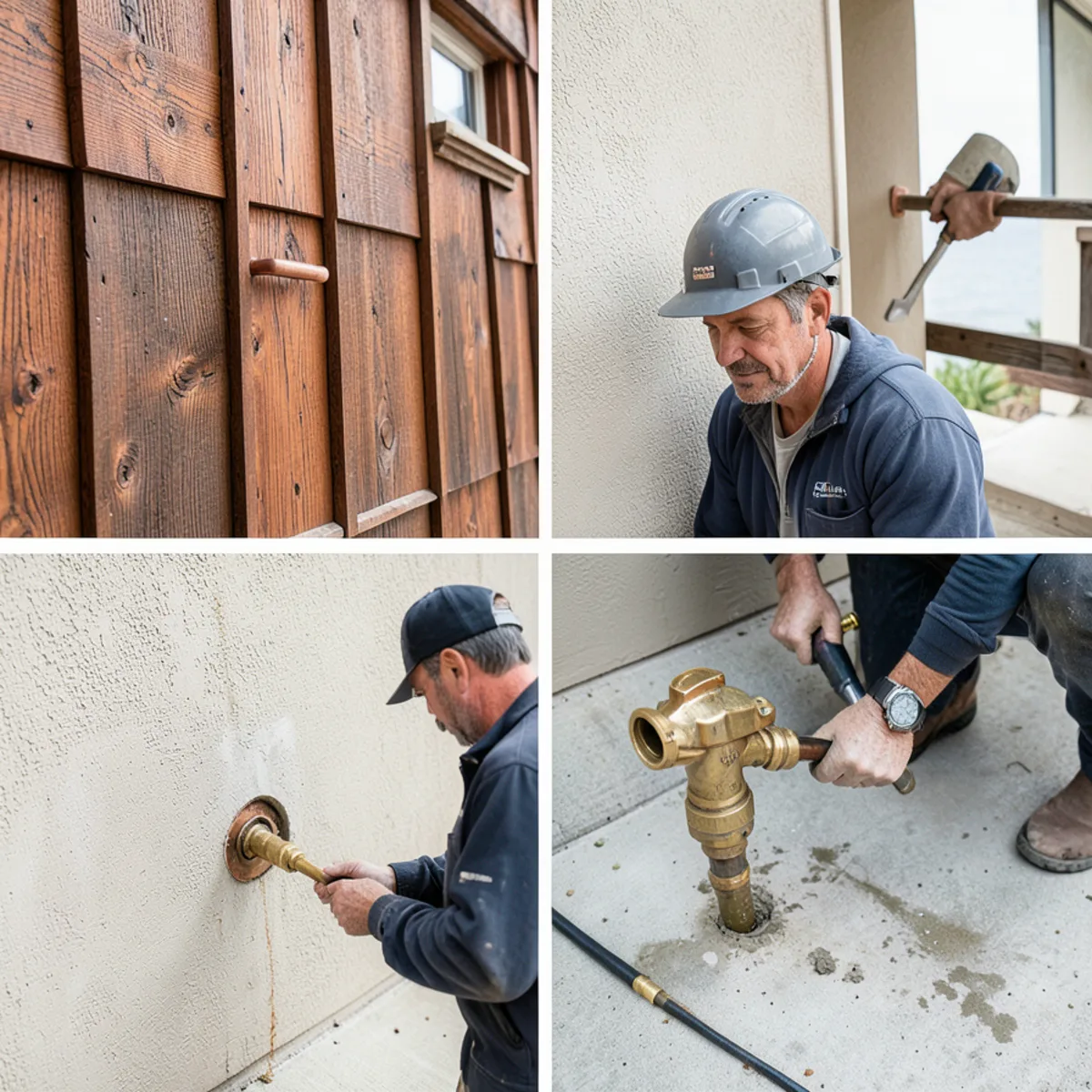
Backflow certification requires testing precision mechanical assemblies under operating line pressure using a calibrated five-valve differential pressure test kit. On high-hazard Reduced Pressure Zone (RPZ) devices (such as Wilkins 375 or Febco 860), the certified tester measures the pressure differential across check valve #1 (minimum 5.0 PSID), checks the shutoff seating of check valve #2 (minimum 1.0 PSID), and confirms that the hydraulic differential relief valve vents water to atmosphere at a minimum of 2.0 PSID above line pressure. For medium-hazard fire lines, Double Check Detector Assemblies (DCDA) undergo similar spring-loaded check testing to confirm complete backflow isolation. Homeowners and property managers across Redwood City and neighboring communities can schedule on-site evaluations with our licensed team to inspect existing manifolds, test static line pressures, and verify code compliance under local municipal ordinances.
Key Takeaways
- Testing conducted using calibrated five-valve differential pressure test gauges
- RPZ check valve #1 must maintain minimum 5.0 PSID pressure differential
- Hydraulic relief valve must vent to atmosphere before differential drops below 2.0 PSID
- Double Check Detector Assemblies tested for forward flow and reverse seating
Common Failure Causes: Grit, Mineral Scale and Rubber Degradation
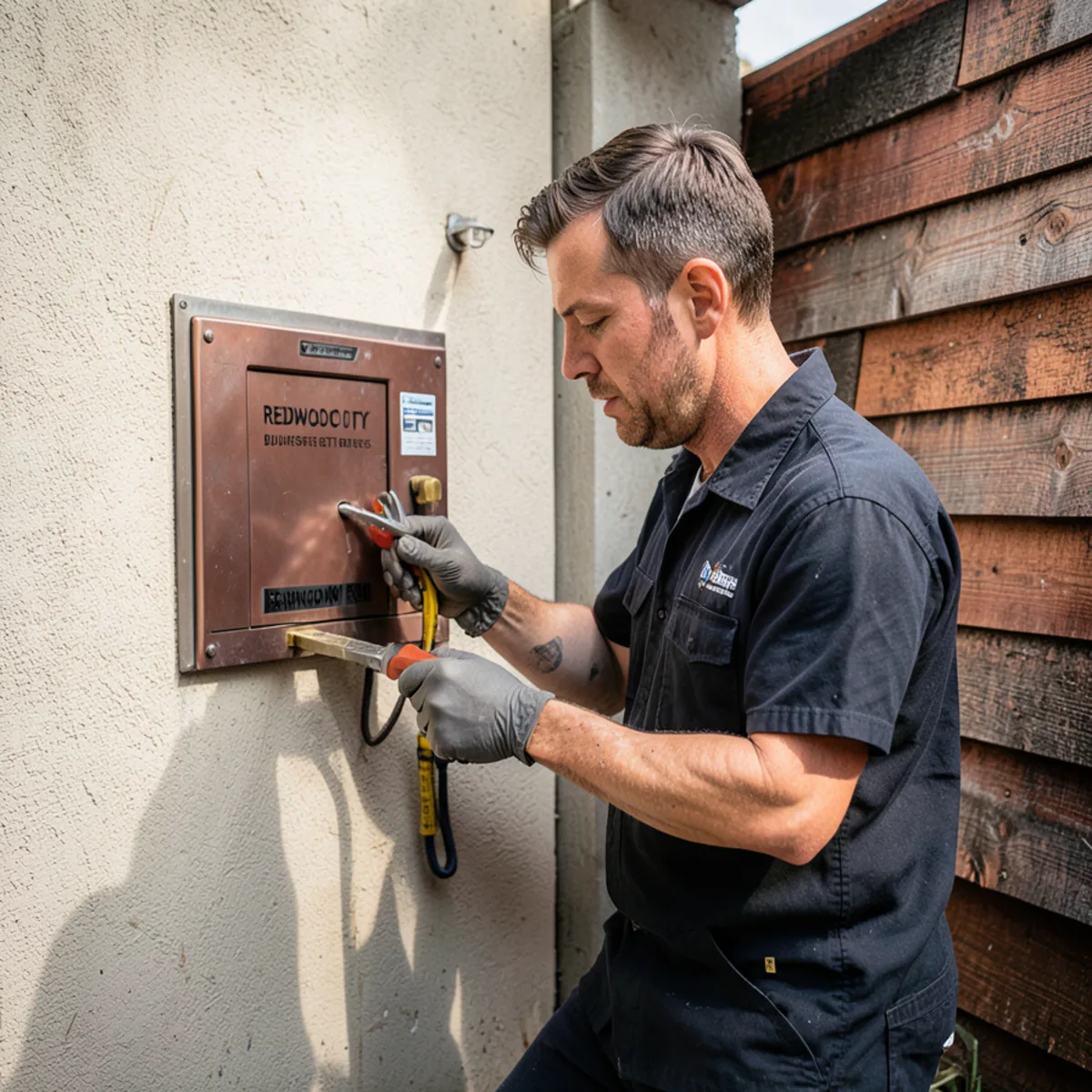
Backflow assemblies operate in harsh conditions and frequently fail annual certifications due to normal wear and municipal line debris. Street water main flushing, nearby construction work, or seasonal pressure swings dislodge rust flakes, silica sand, and mineral scale from municipal mains. This debris lodges between the rubber disc and stainless steel valve seat, preventing check valves from closing completely. Furthermore, continuous exposure to chlorinated municipal water causes internal neoprene or silicone rubber discs to harden, crack, or warp over time. Our technicians carry rebuild kits containing genuine factory diaphragms, springs, and rubber seats to overhaul and re-certify failed units on the spot. Our licensed plumbing specialists dispatched from 1835 Valota Road utilize precision diagnostic instruments and follow all California Plumbing Code guidelines to deliver durable, code-compliant solutions.
Key Takeaways
- Municipal rust particles and sand lodge between rubber discs and brass seats
- Chlorinated municipal water degrades and hardens internal neoprene check seals
- Relief valve spitting water indicates check valve leakage or line pressure swings
- Immediate on-site rebuilding restores compliance without requiring new valve replacement
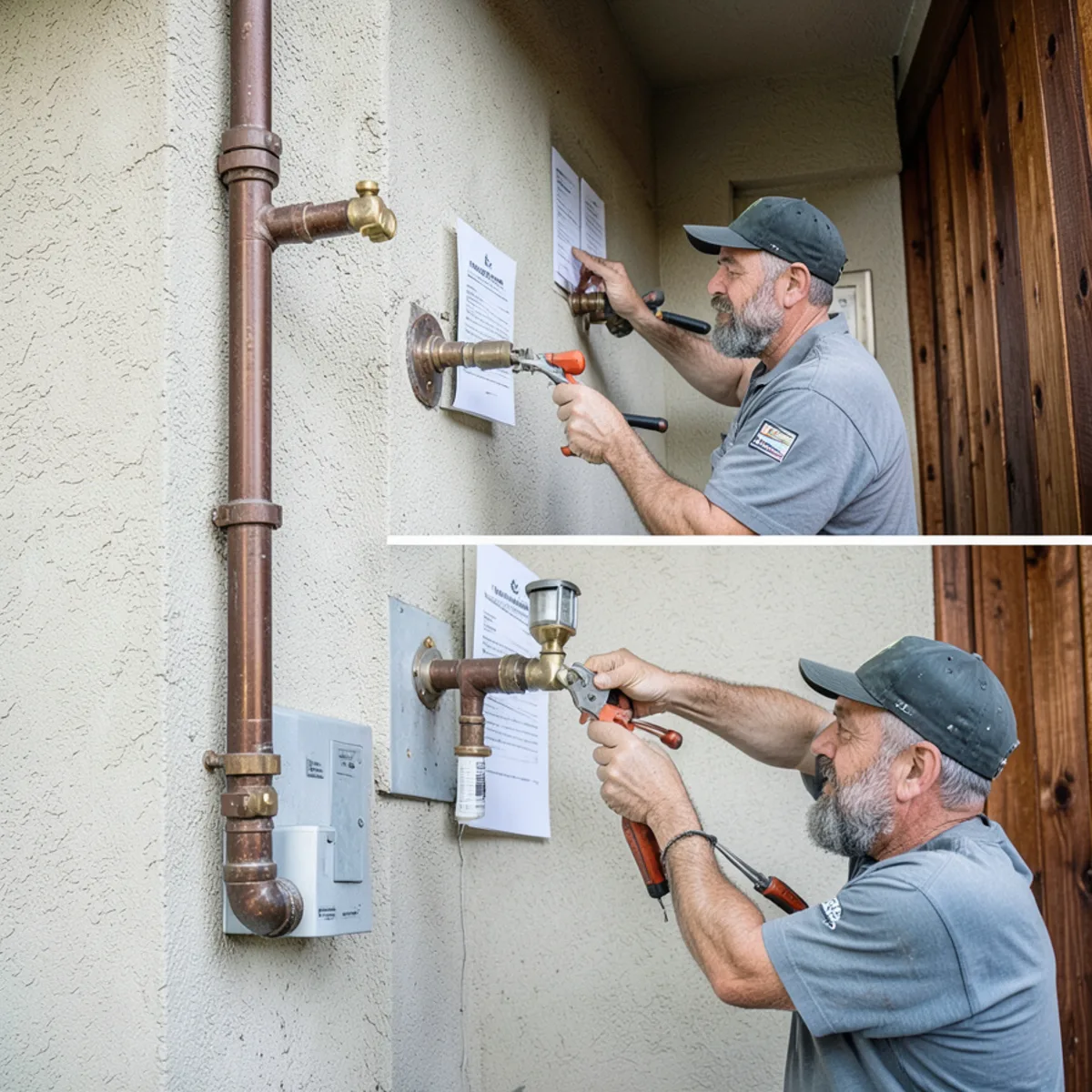
Submission Protocols and City of Redwood City Cross-Connection Sign-Offs
Performing the mechanical test is only half the compliance requirement; the paperwork must be submitted and logged with municipal authorities to clear property records. Our certified AWWA-accredited technicians complete the official City of Redwood City Cross-Connection Control Test and Maintenance Report. We document the assembly manufacturer, model, size, serial number, gauge calibration date, and exact measured differential pressure readings. Our administrative office submits the report directly to the Redwood City Water Division and delivers digital copies to the commercial property owner for corporate compliance records, guaranteeing uninterrupted water service. Every major plumbing repair, repipe, and heating modification performed by our technicians is backed by our comprehensive warranty and coordinated directly with the Redwood City Building Division at 1017 Middlefield Road or local county planning offices.
Key Takeaways
- Official Redwood City Cross-Connection Control Report completed on site
- Documentation includes tester AWWA certification number and gauge calibration dates
- Reports submitted directly to Redwood City Public Works Department Water Division
- Maintains legal commercial compliance and satisfies health department inspectors
Commercial Backflow Assembly Application Matrix
| Assembly Type | Hazard Level | Common Commercial Application | Testing Protocol |
|---|---|---|---|
| Reduced Pressure Zone (RPZ) | High Hazard (Toxic / Chemical) | Commercial kitchens, chemical plants, boilers | Annual differential test; 2.0+ PSI relief |
| Double Check Valve (DCVA) | Low Hazard (Non-Toxic Pollutant) | Standard fire sprinkler systems, dedicated loops | Annual forward flow and check seat test |
| Pressure Vacuum Breaker (PVB) | High/Low Hazard (Back-siphon only) | Elevated landscape irrigation manifolds | Annual air inlet and check valve test |
| Double Check Detector (DCDA) | Low Hazard Fire Main Service | Commercial fire lines with bypass detector meter | Annual certification of main & bypass assemblies |
Common Questions On This Topic
Frequently Asked Questions
Find clear answers to common questions about local plumbing codes, repairs, and our Redwood City service procedures.
The City of Redwood City Water Division issues a formal notice of violation followed by a final shutoff notice. If certified test documentation is not received, municipal water crews will terminate water service to the property to protect the public water supply, and property owners face municipal re-connection fines.
Regulatory References & Standards
- • California Code of Regulations Title 17
- • City of Redwood City Municipal Code Chapter 27
Related Plumbing Services
Target Service Communities
Need professional assistance with this plumbing issue?
Our technicians dispatch daily from 1835 Valota Rd. Call now to speak directly with our Redwood City team.